If you are caring for an older adult, at some point, you may face a big question: In-Home Care or Assisted Living? We all want to ensure our loved ones receive the best care they can in the right environment, but how do we know the best options when a family member needs more care from a professional?
Two primary senior care options typically come to mind when considering “the next steps” for mom or dad: in-home care, where a professional caregiver provides care for your loved one in their own home, and assisted living, where your loved one resides in an apartment-style care facility that can accommodate all or most of the necessary care needs.
Understanding Home Care
Home Care typically involves a professional caregiver (or caregivers) who provide services within one’s residence. This option allows an individual to remain in familiar surroundings while receiving the assistance they need for their own daily activities. Home care can be tailored to the individual’s specific needs, ranging from a few hours a week to 24/7 care.
The Cost of Home Care in the USA
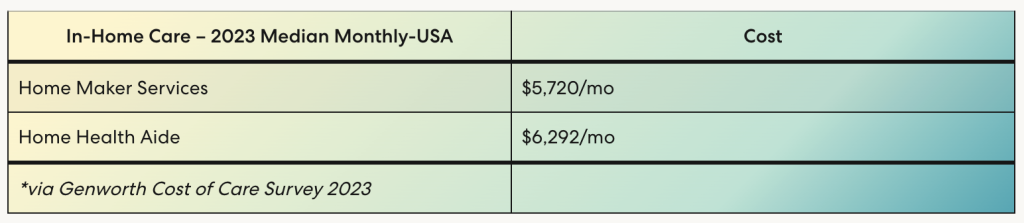
The cost of home care in the USA is nothing to sneeze at and has surprised family members while shopping prices around. According to Genworth’s “cost of care survey”, the median monthly cost of In-Home Care Services, including health care, is around $6,292 per month (or $75,504 annually).

In-Home Care Services Typically Include:
- Personal care: Assistance with bathing, dressing, grooming, and hygiene.
- Medication management: Ensuring timely and correct medication administration.
- Meal preparation: Cooking nutritious meals and helping with feeding if needed.
- Housekeeping: Light cleaning, laundry, and other household chores.
- Transportation: Accompaniment to appointments, errands, and social activities.
In-Home Care offers a high level of personalization and flexibility, making it a great option for those who need assistance but wish to stay in their own home.
Understanding Assisted Living
Assisted living facilities offer a community-based environment where residents reside in private or semi-private apartment-like settings. These facilities provide a combination of housing, personal care services, and care support. Assisted living is designed for individuals who need more comprehensive assistance with daily activities, but do not require the intensive medical care provided by memory care or nursing homes.
The Cost of Assisted Living in the USA

The cost of assisted living in the USA is always a factor when choosing between assisted living or home care. Depending on one’s specific care needs and family preferences the cost associated with assisted living may be higher or lower than a home care option.
According to Genworth’s “cost of care survey” the median cost of assisted living in the USA is around $5,350 per month (or $64,200 annually).
*Click here to see the Monthly Cost of Assisted Living by State

Assisted Living Facilities offer:
- 24-hour supervision and security: Ensuring safety and quick response in emergencies.
- Social and recreational activities: Programs designed to engage residents and promote social interaction.
- Assistance with daily living activities: Help with bathing, dressing, grooming, and mobility.
- On-site medical services: Access to healthcare professionals for routine medical care and emergency services.
- Communal dining: Nutritious meals are served in a social setting, often with dietary accommodations if necessary.
- Structure: Assisted living facilities offer a structured environment with opportunities for socialization and comprehensive support services.
Home Care and Assisted Living: 5 Factors to Consider
Level of Care Needed: An assessment of one’s health status and daily living requirements is a must. Home care may be more suitable for those needing less assistance, while assisted living can benefit individuals who may require more comprehensive support. Consider any chronic conditions, mobility issues, and the ability to perform activities of daily living (ADLs) independently.
Cost Implications: Home care costs can vary based on the number of hours required, so depending on the situation, home care can be more affordable if part-time assistance will suffice. Assisted living often involves a monthly fee covering housing, meals, and care services. It’s important to compare the costs of both options, considering long-term affordability and any potential benefits from insurance or government programs.
Social Engagement: Assisted living facilities provide structured social activities, which can be advantageous for seniors seeking interaction and a sense of community. In contrast, home care may require additional effort to ensure social engagement, such as arranging visits from friends and family or participating in community events.
Independence and Comfort: Remaining at home offers comfort and familiarity, which is significant for many seniors. However, assisted living provides a safe environment while at the same time promoting independence and socialization within a community setting. The choice depends on the individual’s preference for familiarity versus the benefits of a communal living environment.
Family Involvement: Home care allows family members to be more directly involved in daily care, providing opportunities for closer supervision and engagement. Assisted living can alleviate some caregiving responsibilities by offering peace of mind that professionals are available around the clock. When leaning toward home care, consider the level of involvement required for family members, as this can impact the family dynamic unless there are clear expectations and communication among family members.
Here’s a great video by Mark & Jody Rollins from “Retirement Transformed” to help walk through the practical differences between Aging in Place vs. Assisted Living. Enjoy!
Making the Final Decision
Choosing between home care and assisted living depends on individual circumstances, preferences, and needs. It’s essential to involve the individual requiring care as well as key family members in the decision-making process. Proper consideration must be given to financial constraints, care needs, and family preferences so that the best decision can be made during these difficult times.
It’s helpful to consult with a healthcare professional (such as a geriatric care manager or a referral agency professional) before making a final decision. One last piece of advice is to visit several assisted living facilities in your area to gain a good understanding of their vibe and the services available. They’re all a bit different.
At Aging Today, we are committed to providing resources and support to help you navigate these critical decisions, ensuring the well-being of your aging loved ones.
Chris is a seasoned healthcare executive with decades of experience and the co-founder of AgingToday.com. Chris is an expert in digital transformation, health technology and artificial intelligence. He's currently focusing on how these innovations can be leveraged to improve the lives of aging adults.