


As our loved ones age, sleep disturbances can become a common challenge, especially for those experiencing Alzheimer’s or other forms of dementia.
One of the more confusing sleep issues that some caregivers can encounter is “sundowning,” in which confusion, agitation, and restlessness worsen during the late afternoon and evening.
Research suggests approximately 19% of people with dementia experience sundown syndrome, or sundowning, a group of symptoms or behaviors including agitation, restlessness and confusion that can occur as the daylight begins to fade. – Dr. Keith Vossel | UCLA Health
Sundowning can disrupt routines, strain relationships, and impact the health of both the person experiencing it and their caregivers. However, with preparation and the right strategies, it is possible to manage these symptoms and promote better rest for everyone involved.
What is Sundowning?
Sundowning refers to a pattern of behavioral changes that occur in people with dementia, typically during the late afternoon or early evening. It may manifest as increased anxiety, confusion, aggression, or wandering. While the exact cause isn’t fully understood, contributing factors may include fatigue, overstimulation, hormonal changes, or discomfort caused by unmet needs.
Tips for Dealing with Sundowning and Other Sleep Issues
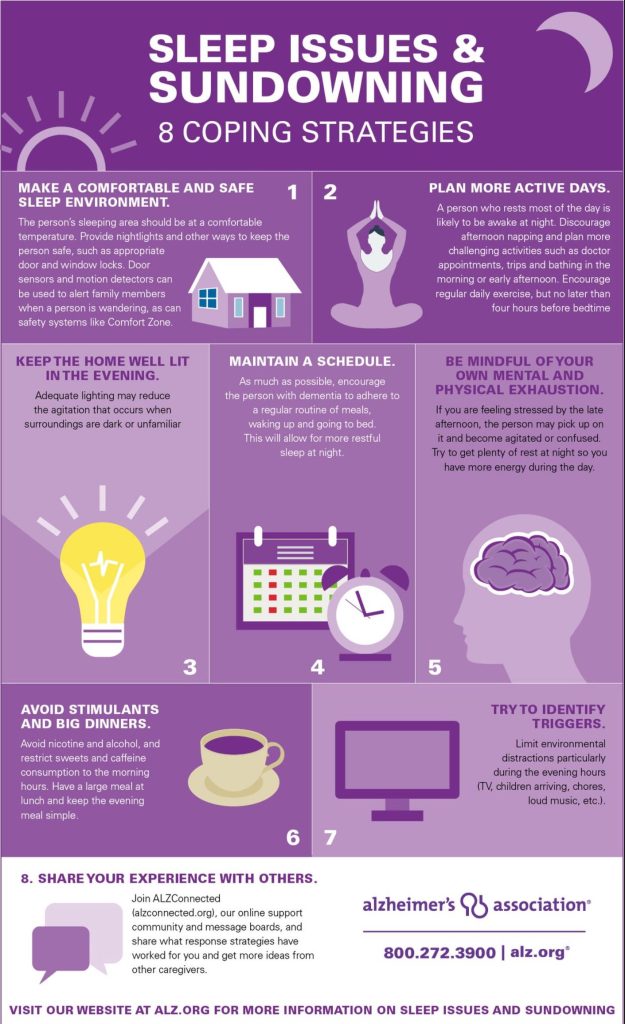
Create a Comfortable and Safe Sleep Environment
The bedroom should be a sanctuary for rest. Ensure the room is a comfortable temperature, quiet, and free from clutter. Use blackout curtains or nightlights as needed. Consider installing motion detectors or door sensors to alert you if wandering occurs, and secure windows and doors to ensure safety. A familiar and calming environment can help reduce confusion and promote better sleep.
Keep the Home Well-Lit in the Evening
Adequate lighting can help reduce the agitation that arises from shadows or unfamiliar surroundings. Use soft, warm lighting to create a calming atmosphere. Avoid abrupt changes in lighting that might confuse or startle your loved one. Consistent and gentle lighting can help create a soothing environment as evening approaches.
Maintain a Consistent Schedule
Routine is crucial. Encourage regular times for meals, activities, and sleep. Consistency helps reduce confusion and sets expectations, which can minimize agitation. Avoid letting naps extend too long or too late in the day, as this may disrupt nighttime sleep. A well-structured day can help your loved one feel more secure and less anxious.
Plan Active Days
Physical and mental activity during the day can help reduce restlessness in the evening. Schedule doctor’s appointments, exercise, and stimulating activities earlier in the day. Avoid overstimulation close to bedtime to prevent lingering agitation. Engaging activities can promote better sleep by tiring out both body and mind.
Identify and Minimize Triggers
Observe and note patterns in your loved one’s behavior to identify potential triggers. These might include loud noises, unfamiliar people, changes in routine, or even certain times of day. Limiting exposure to these triggers can help create a more calming environment. Understanding and mitigating triggers can significantly reduce episodes of sundowning.
Avoid Stimulants and Heavy Evening Meals
Limit caffeine, nicotine, and alcohol consumption to the earlier part of the day. Opt for a light, easily digestible dinner to avoid discomfort during the night. Foods high in sugar may also contribute to restlessness and should be avoided in the evening. A balanced diet and mindful eating can enhance overall well-being and sleep quality.
Take Care of Yourself
Caregiving is demanding, and your well-being directly impacts your ability to care for others. If you’re feeling stressed or physically exhausted, your loved one may pick up on it and become more agitated. Prioritize self-care by maintaining a healthy sleep schedule, seeking support when needed, and taking breaks. Your health and resilience are essential for effective caregiving.
Reach Out for Support
Join caregiver support groups online or in-person to share your experiences and learn from others. The Alzheimer’s Association offers resources like ALZConnected (alzconnected.org), where you can find community and expert advice. Connecting with others who understand your challenges can provide emotional support and practical tips.
Professional Help and Resources
If sleep disturbances and sundowning become unmanageable, consult a healthcare provider. They can rule out underlying medical conditions, adjust medications, or suggest therapies that might help. In severe cases, professionals may recommend melatonin supplements or other treatments.
Professional guidance can be crucial in managing complex care needs.
In Summary
Dealing with sleep issues and sundowning can be overwhelming, but you don’t have to face it alone. By implementing these strategies, you can create a safer, calmer environment that supports better rest for your loved one and yourself. Remember, caregiving is a journey – seek support when you need it, and take it one day at a time.
At Aging Today, we’re committed to providing resources and support to help you navigate this journey with confidence and compassion. Together, we can ensure your loved one’s future is secure and their care is dignified.
Chris is a seasoned healthcare executive with decades of experience and the co-founder of AgingToday.com. Chris is an expert in digital transformation, health technology and artificial intelligence. He's currently focusing on how these innovations can be leveraged to improve the lives of aging adults.


